

Physiotherapy guide • Nicosia
After ACL reconstruction: rehabilitation stages and practical goals
Rehabilitation after anterior cruciate ligament reconstruction is a process of restoring function while respecting surgical healing. It involves more than waiting for a date on the calendar or simply reducing pain. The plan depends on the operation, any additional procedures and your goals. Physiotherapy can support progression, but the surgical team’s instructions and individual assessment remain essential throughout recovery.
Start with the operation details
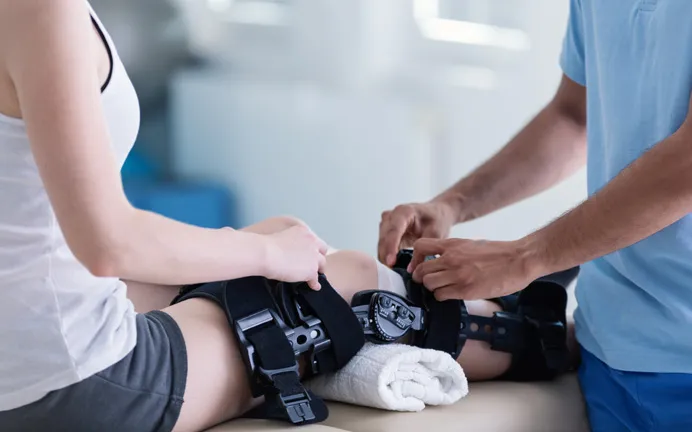
Bring the operation report and postoperative instructions. Associated meniscus or cartilage procedures may change restrictions and progression. Clarify guidance about weight bearing, braces and permitted movement before treating a generic online protocol as your own. If information differs between documents, ask the treating team to resolve it. A programme designed for a different procedure may not be suitable even when both operations are called ACL reconstruction.
Early goals relate to daily function
Depending on the surgical instructions, early rehabilitation may address swelling, knee movement, muscle activation and walking. Practical tasks such as getting in and out of a chair or managing stairs can also matter. Ask how to perform these tasks and use any prescribed equipment. The aim is appropriate progress from your current status, not reaching another patient’s early milestone as quickly as possible.
Strength and movement quality develop over time
As permitted, rehabilitation can progress towards greater strength and control in tasks relevant to everyday life and sport. Exercise selection and difficulty should reflect current assessment, the response to training and surgical considerations. Explain what happens later in the day and the following day, not only during the appointment. Recurrent swelling or other setbacks may indicate that the plan needs review rather than further progression.
Running is a separate decision from walking
Walking comfortably does not demonstrate that the knee is ready for running, jumping or rapid changes of direction. These activities have different requirements. Ask which clinical and functional criteria will be used before they are introduced. Progression should follow an agreed plan rather than an unsupervised test of whether the knee feels strong enough on a particular day.
Return to sport needs more than a time target
A return-to-sport discussion may consider strength, functional performance, confidence, training demands and the surgeon’s advice. Passing one test cannot guarantee freedom from further injury. Returning to modified training and returning to competition are also different steps. A shared plan between the person, rehabilitation professional and relevant sports team can help define what is permitted at each stage.
Watch for postoperative problems
Increasing wound redness, discharge, fever or a marked unexplained increase in pain or swelling needs prompt medical assessment. New calf swelling or pain requires urgent medical advice. Sudden chest pain or breathlessness is an emergency: call 112. Contact the treating team if there is new locking, giving way or a setback after a fall; do not simply continue the existing exercise plan unchanged.
Keep the programme practical and measurable
Discuss what equipment, space and time you have available between appointments. Agree goals that can be reviewed, such as a daily task or an assessed movement, rather than relying only on how hard a session felt. Tell the therapist if fear, fatigue or competing demands make the plan difficult. Adapting delivery can be more useful than repeatedly providing instructions that cannot be followed.
Preparing for rehabilitation in Nicosia
When arranging an appointment, mention the date of surgery, the procedure and any current restrictions. Bring relevant follow-up recommendations and explain the activity level you hope to regain. Ask how communication with the surgical team will be handled if clarification is needed. There is no single number of visits or universal return-to-sport date that can be safely promised before assessment.
Related physiotherapy care
Frequently asked questions
Can I follow a standard ACL protocol online?
It may provide background, but should not override your operation details, surgeon’s restrictions or individual rehabilitation assessment.
Does absence of pain mean I can play sport?
No. Readiness also involves healing considerations, strength, function, confidence and sport-specific demands.
What if a meniscus procedure was performed too?
Tell the physiotherapist and bring the operative instructions, because additional procedures may change the plan.
Is a setback always a sign of graft damage?
Not necessarily, but new injury, marked swelling, locking or instability should be assessed rather than guessed about.
Sources and further reading
Discuss your rehabilitation needs
Elinos Petrou Physio & Rehab Center · Strovolos, Nicosia